Potato Flakes vs. Mashed Potato Powder: What's the Real Difference?
If you've ever walked down the instant food aisle or looked at bulk ingredients for a food factory, you've probably run into potato flakes and mashed potato powder. They look similar, they both come from potatoes, and they both turn into mashed potatoes when you add water. So, are they actually the same thing?
Not even close. In the food industry, using the wrong one can completely ruin a recipe or a manufacturing run. If you are a snack manufacturer, a bakery owner, or just curious about how these products work, here is the real story behind the two, straight from our processing perspective.
The basics: Raw ingredient vs. Blended mix
Here is the easiest way to think about it: potato flakes are a pure, single-ingredient raw material. Mashed potato powder is usually a finished, seasoned mix meant for retail buyers.
If a factory is making extruded snacks, potato chips, or using potatoes as a binder in baking, they buy pure potato flakes in bulk. They cannot use retail mashed potato powder because it already contains salt, emulsifiers, whey powder, or dairy. Those extra ingredients would mess up the dough and the frying process.
Interestingly, potato flakes are actually the starting point for mashed potato powder. Retail brands buy bulk flakes, grind them down into a fine powder, blend in milk powder, salt, and flavorings (like garlic or butter), and pack them into boxes or cups for consumers.
The key differences you need to know
1. How they look and feel
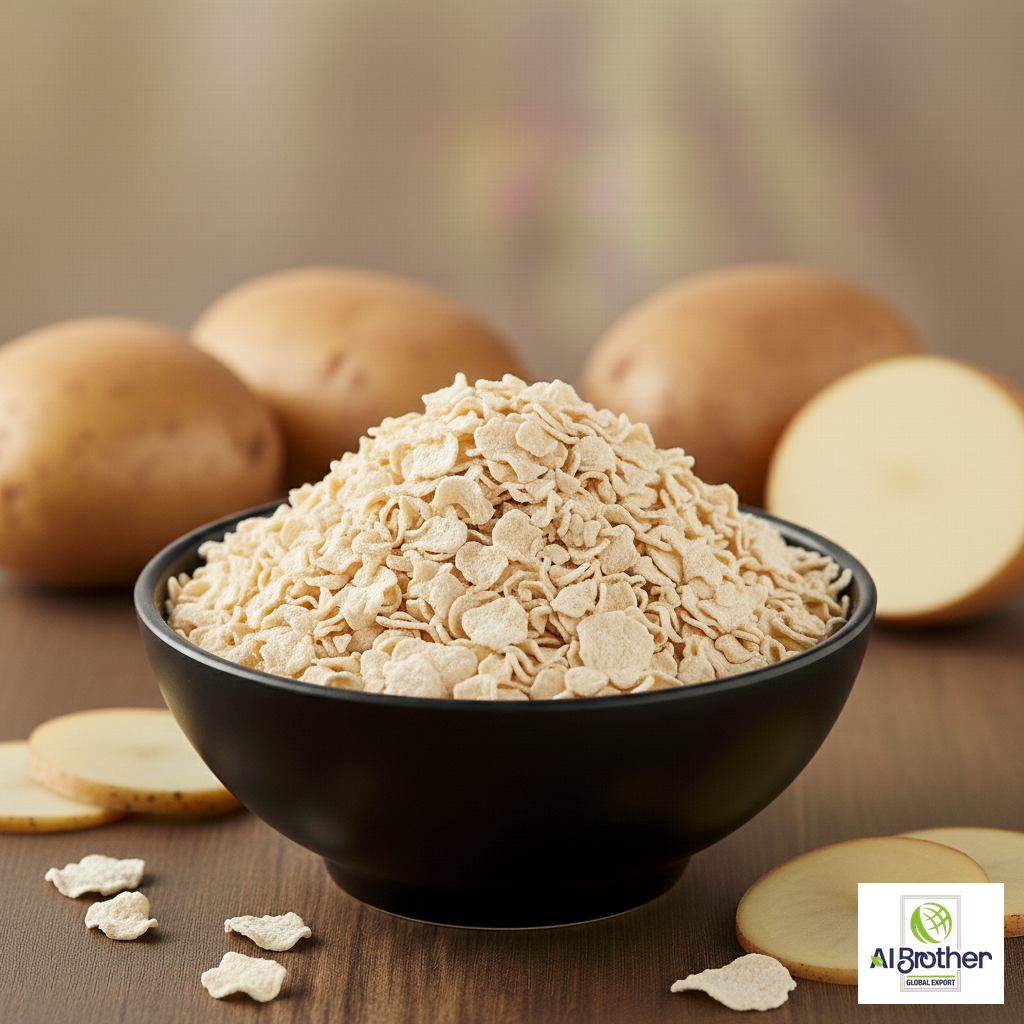
Potato flakes look like tiny, paper-thin white or cream-colored snowflakes. Because they are so light and airy, they take up a ton of space. If you fill a container with flakes, it holds much less weight compared to powder because of the low bulk density. Mashed potato powder, on the other hand, is a fine, sandy powder that flows easily and packs tightly.
Also, don't confuse flakes with potato granules. Granules are processed differently so that the starch cells don't break. This makes them look like very fine sand, and when you add water, they make a non-sticky, fluffy mash.
2. The manufacturing process
Making potato flakes requires heavy industrial machinery. We wash, peel, boil, and mash fresh potatoes. Then, we spread this hot mash onto giant, steam-heated drum rollers. The mash dries into a thin sheet in seconds, and a blade scrapes it off. We then break this sheet into small flakes. Because of these massive drums, you can't make flakes in a small shop.
Making mashed potato powder is much simpler. It is mostly a mixing job. You take pre-made flakes or granules, run them through a grinder to make them fine, mix in your seasonings, and pack them up. It doesn't require any drying machinery.
3. Price and custom recipes
Since potato flakes are a bulk, unprocessed ingredient, they are much cheaper. If you are running a business, buying flakes gives you 100% control over the taste, sodium level, and ingredients of your final product. Mashed potato powder has a big markup (often 50% to 80% higher) because you are paying for the blending, packaging, and retail brand name.
Quick comparison summary
| Feature | Potato Flakes | Mashed Potato Powder |
|---|---|---|
| Ingredients | 100% pure potato | Potato with salt, dairy, flavors |
| Texture | Fluffy, paper-thin flakes | Fine, free-flowing powder |
| Best for | Snack factories, baking, binding | Quick meals, retail consumers |
| Customization | Fully customizable | Pre-flavored, fixed recipe |
| HS Code | 1105.20.00 | 2005.20.00 |
How to choose the right one for your business
Go with Potato Flakes if:
- You run a food factory or bakery and need a clean-label binder or thickener.
- You want to keep your costs low and create your own spice and salt blends.
- You are buying in bulk (like 20kg or 25kg bags).
Go with Mashed Potato Powder if:
- You want a quick, instant side dish that only needs hot water.
- You don't want to buy extra butter, milk, or salt to get a tasty mash.
The science behind the flake: The precook-cool-cook method
Ever wondered why instant potato flakes don't turn into a sticky, gummy paste when you add water? In a normal kitchen, if you overwork mashed potatoes, they release too much free starch and become gluey. In a factory, we prevent this using a smart three-step cooking process called the precook-cool-cook method.
First, we blanch the sliced potatoes at around 70°C (158°F) for 20 minutes. This gelatinizes the starch inside the potato cells but doesn't cook them fully. Next comes the secret step: we cool them down rapidly to below 20°C (68°F) using cold water. This cooling process retrogrades the starch, meaning the starch molecules crystallize and lock themselves inside the cell walls. Finally, we steam-cook the potatoes fully. Because the starch is locked, the cells don't rupture when we mash them. This is why you get a light, fluffy texture instead of sticky wallpaper paste when you mix them with liquid.
Why potato varieties and 'dry matter' matter to snack factories
If you are a snack manufacturer buying potato flakes in bulk, you aren't just looking at the price. You are looking at two key specifications: dry matter content and reducing sugar levels.
Dry matter is basically the percentage of solids in a potato after all the water is removed. A good potato for flakes needs a high dry matter content, usually between 20% and 22%. In countries like India, varieties like Kufri Jyoti or Kufri Laukar are preferred because of their high solids. If the dry matter is too low, you need to evaporate more water during drying, which skyrockets energy costs and yields a weaker flake.
Reducing sugars (like glucose and fructose) are another major headache. If your potato flakes have reducing sugars above 0.25%, they will undergo the Maillard reaction (browning) when fried. This means your potato chips or noodles will turn dark brown, look burnt, and taste bitter. That is why we monitor sugar levels closely during storage and processing to ensure the flakes fry to a perfect golden color.
Industrial specs: Water Absorption Index (WAI)
In snack production lines, consistency is everything. Food technologists measure flake quality using the Water Absorption Index (WAI) and Water Solubility Index (WSI). WAI tells you exactly how many grams of water one gram of potato flakes can hold. If the WAI is too high, the dough will be too wet, requiring longer frying times and absorbing too much frying oil. If it's too low, the dough won't bind properly, leading to cracked, brittle snacks. By adjusting the speed and temperature of our drum dryers, we can customize the flake texture to match the exact WAI required by a factory's extruder machines.
Need a reliable supply?
At AI Brothers, we supply export-grade Potato Flakes and clean-label Potato Powder to buyers worldwide. We source fresh potatoes, process them under strict quality control, and handle all the logistics and export documentation.
If you need bulk samples or want to discuss pricing, drop us a line through our contact page. We'd love to help you find the right fit for your production line.