White Onion vs. Red Onion: Which one should you actually use?
Ever found yourself staring at the onion bin at the store, wondering if it really matters if you grab a red one or a white one?
Honestly, it does. They aren't just different colors. They taste different, they cook differently, and if you are using them in a food business, they dry into very different products.
Since we handle tons of onions every single day at our plant in Mahuva (Gujarat's main hub for dried vegetables), we see both of these varieties all the time. Here is the honest breakdown of how they compare, with no complicated jargon.
How they look and crunch
White onions have a clean, papery white skin. Inside, they are very crisp and crunchy. They have a lot of water in them, which is why they have a nice 'snap' when you bite them raw. Red onions have that purplish skin and pinkish rings. They are a bit softer and look beautiful when sliced up on a plate.
The taste test
Raw white onions have a sharp, spicy bite. They are the ones that will make your eyes water when you chop them. But if you cook them, that sharp taste goes away and they become sweet and mild.
Red onions are much milder and sweeter from the start. This is why people love them raw in salads or on burgers. When you grill or fry them, they caramelize beautifully because of their natural sugars.
The health differences
Both are great for you, but they do different things.
- Red onions: These get their purple color from natural pigments (the same kind found in blueberries). They are great for fighting inflammation and support heart health.
- White onions: These are fantastic for digestion. They are full of prebiotic fibers that keep your stomach happy, plus they have a good amount of Vitamin C.
Here is a quick look at the basic numbers per 100g:
| Nutrient | Red Onion | White Onion |
|---|---|---|
| Calories | 33 kcal | 35 kcal |
| Carbohydrates | 6.1 g | 7.68 g |
| Dietary Fiber | 1.7 g | 1.2 g |
| Vitamin C | 6.0 mg | 5.57 mg |
| Potassium | 121 mg | 141 mg |
| Calcium | 25 mg | 21 mg |
Best ways to use them in the kitchen
Don't worry too much if you mix them up, but here is a simple cheat sheet:
White onions are best for:
- Mexican dishes: Authentic tacos, fresh salsas, and guacamole almost always use raw white onions. The sharp bite cuts right through rich ingredients like avocado.
- Soups and white gravies: Because they have no red skin, they won't turn your white cream soups or light gravies pink.
- Quick stir-fries: They cook fast and blend in easily.
Red onions are best for:
- Salads and sandwiches: Raw red onions add a nice crunch and color to burgers, wraps, and Greek salads.
- Grilling: Toss thick wedges on the grill. They get sweet and smoky.
- Pickling: Vinegar turns red onions a bright pink. They make a perfect topping for street food.
What happens when they are dried?
If you run a food brand or kitchen, peeling fresh onions is a headache. That is where dehydrated flakes and powders are a lifesaver.
Dehydrated White Onion:
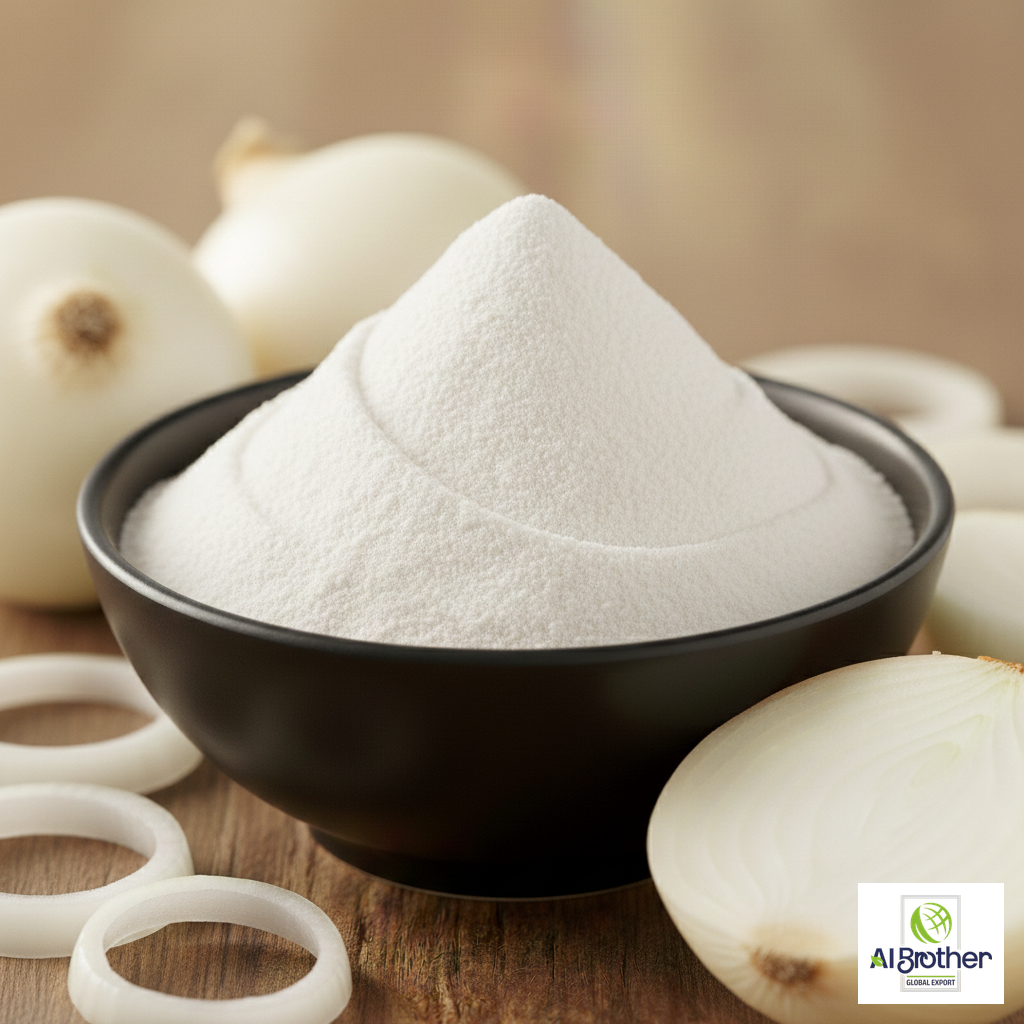
This dries into a clean, cream-colored powder or flake. Since it doesn't change the color of your food, White Onion Powder and White Onion Flakes are the industry standard for instant soups, seasonings, ranch dressings, and bread mixes.
Dehydrated Red Onion:
These keep their pinkish-purple color after drying. Red Onion Powder and Red Onion Flakes add a sweet-spicy depth that is perfect for barbecue seasonings, meat rubs, snack seasonings, and dark gravies.
For quick toppings, we also make crispy fried onions. Fried White Onions and Fried Red Onions are ready to toss straight onto your biryani or burgers.
The way we do it at AI Brothers
We like to keep things simple. We get fresh onions from local farms here in Gujarat, dry them at low temperatures in our Mahuva facility, and pack them up. We don't add any starch, chemicals, or anti-clumping powders. It is just 100% pure onion.
Why food businesses are switching to dehydrated onions (A quick reality check)
If you run a restaurant, a cloud kitchen, or a spice brand, you already know the pain of fresh onion prices. One month they are dirt cheap, and the next month they skyrocket. It is a nightmare for budgeting. Plus, storing bags of fresh onions takes up valuable space, and half of them end up rotting before you can even use them. Not to mention the hours your staff spends peeling and crying over them every single morning.
That is why so many brands are quietly moving to dehydrated flakes and powders. A 10kg bag of dried onion flakes is equivalent to about 80kg to 100kg of fresh onions. Think about the space you save. You can stack them in a dry corner of your pantry, and they stay perfect for over a year. No wastage, no price volatility, and zero prep time. You just scoop what you need and throw it straight into your gravy or spice mix. It is consistent, easy on the wallet, and frees up your kitchen staff to focus on actually cooking.
How to actually use dehydrated onions in your kitchen (The right way)
If you've never used dried onions before, you might wonder if you can just throw them into a hot pan with oil. Here is a pro-tip from our team: don't do that. Onion powder and flakes have zero moisture. If you toss them straight into smoking hot oil like you would with fresh onions, they will burn in about two seconds, turning bitter and black.
For dishes that have plenty of liquid—like soups, daals, curries, or gravies—you don't need to do anything special. Just toss the flakes or powder directly into the simmering sauce. They will absorb the liquid and cook beautifully on their own, giving you that rich onion flavor instantly.
But if you are using them for stir-fries, dry sabzis, or toppings, you need to rehydrate them first. Simply soak your onion flakes in warm water for about 15 to 20 minutes. Drain the excess water, and they are ready to sauté just like fresh onions. Also, keep the soaking water! It is packed with sweet onion flavor, so you can use it as a stock for your sauces or rice dishes. Once you get the hang of it, there is no going back.
If you want to check out our bulk products, take a look at our full product page or get in touch with us. We are always here to help you find the right fit for your business.